Tratamientos / Treatments
– ¿Y no me va a poner un tratamiento? Así, sin más, hablando…?
El comentario puede aparecer tras una hora larga de explicaciones sobre origen neuronal del dolor. Se supone que instruir no es un tratamiento, un enfoque, una opción válida.
Parece, para ciudadanos y profesionales, que debe existir una acción acoplada que dé sustancia al simple discurso instructivo, a la palabrería. Habría que trabajar las emociones, ver a una persona y no sólo un cerebro. Terapias, sesiones, métodos… no sé… algo…
No entiendo bien las reticencias para validar el trabajo cerebral, la reconstrucción del relato que el cerebro va hilando sobre el cuerpo, la relevancia de cuanto ha ocurrido, su origen, su pronóstico, cómo se presenta el futuro.
– ¿Sólo instrucción, reprogramación, cambio de chip…? No servirá. Hay que hacer algo más…
Conceptos importantes como la relevancia del miedo somático (cerebral) a la necrosis como posibilidad, la estructura fóbico-adictiva cerebral, la psicopatología del organismo, el error en la toma de decisión, la disfunción de la detección del error, la culturización… son irrelevantes, al parecer.
El esquema o imagen corporal, cómo evalúa el cerebro el estado del organismo, su vulnerabilidad, influye poderosamente en lo que el individuo percibe como noticia de sí mismo, de su interior.
– Veamos. Vamos a tratar de acercarnos a la narración que su cerebro ha ido construyendo sobre el cuerpo y sobre su interacción con sus intenciones y proyectos.
Si yo, de entrada, planteara este objetivo, me quedaría en pocos días sin pacientes. Sin embargo debería ser el objetivo principal, tratar de ponernos en el pellejo del cerebro como ámbito de decisiones que nos afectan.
– ¿Cómo estoy?
– Su cuerpo real está bien, el virtual está profundamente equivocado…
– ¿?
– Le explico…
Muchos padecientes aplican la táctica de Santo Tomás: ver para creer. Si el dolor se va tras la acupuntura, creo en ella, aun cuando luego ya no funcione y dejemos de creer.
Las creencias son plásticas, adaptables…
En cuestiones cerebrales no sólo hay que ser como Santo Tomás. Conviene completar la estrategia de la validación visual con la de la creencia, el conocimiento: creer para ver…
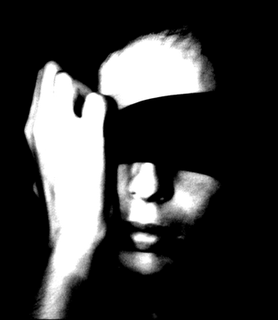
A veces para ver hay que quitarse la venda…
***
– Am I not going to get any treatment? Is it just like that, just talking…?
This comment may come up after an hour long explanation of neuronal origin of pain. It is assumed that instruction is not a valid treatment, approach or option.
It seems, for citizens and professionals, that there must be a coupled action that gives substance to the simple instructional discourse, the talk. Emotions should be worked on, seeing a person and not just a brain. Therapies, sessions, methods… I don’t know, something.
I don’t really understand the reluctance to validate the brain work, the reconstruction of the story that the brain is bit by bit writing on the body, the relevance of what has happened, its origin, its prognosis, what the future looks like.
– Only training, rescheduling, chip changing…? It will not be enough. We must do something else.
Important concepts such as the relevance of somatic (cerebral) fear to necrosis as a possibility, the addictive-phobic brain structure, organism’s psychopathology, error in decision-making, dysfunction of error detection, acculturation… are irrelevant, apparently.
The schema or body image, how the brain evaluates the state of the organism, its vulnerability, has a powerful influence on what the individual perceives as news of oneself or of one’s inside.
– Here. We will try to approach the story that your brain has been building of your body and of its interaction with your intentions and projects.
If I started explaining it that way, I would, in a few days, run out of patients. However, it should be the main goal, trying to put ourselves in the shoes of the brain as the scope of decisions that affect us.
– How am I?
– Your real body is fine, the virtual one is profoundly mistaken …
– ?
– I’ll explain it to you.
Many sufferers apply the tactics of St. Thomas: Believing is seeing. If pain goes away after acupuncture, I believe in acupuncture, even when after a while it stops working and I stop believing.
Beliefs are plastic, adaptable.
In brain issues we not only have to be like St. Thomas. The strategy of visual validation must be supplemented with belief, knowledge: Seeing is believing.
Sometimes, the band should be removed in order to see.
Comentarios (6)
Los comentarios están cerrados.